
 Free Shipping Ireland & UK | Now Shipping Worldwide
MTHFR & Psychiatric Disorders: What the Science Is Finally Showing
For years, people struggling with anxiety, depression, ADHD, or mood swings were told their symptoms were “chemical” or “genetic,” with no deeper explanation.
But now research is highlighting something far more specific how the MTHFR gene impacts methylation, neurotransmitters, and brain health.
This connection is becoming one of the biggest breakthroughs in mental-health nutrition.
🔬 What Is MTHFR?
The MTHFR gene is responsible for converting folate (Vitamin B9) into its active form L-methylfolate, which the brain needs to:
• Make serotonin
• Make dopamine
• Make norepinephrine
• Regulate homocysteine
• Repair neurons
When the gene is mutated (C677T or A1298C), this conversion is weakened.
Some people convert as little as 30–40%, meaning the brain is constantly running on low fuel.
🔥 Why Does This Affect Mental Health So Strongly?
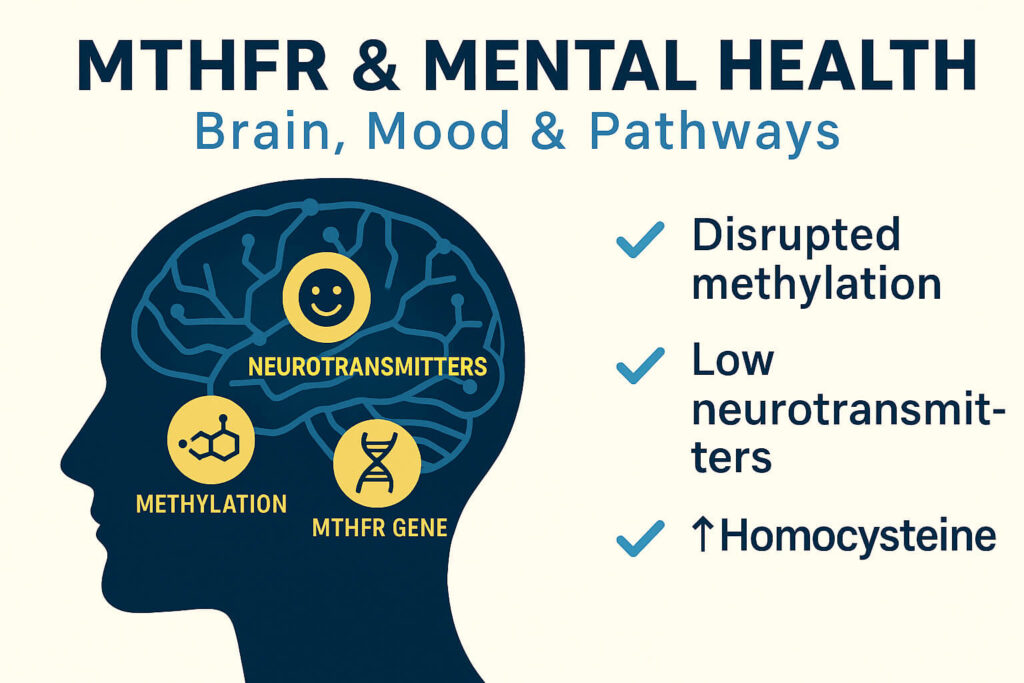
1️⃣ MTHFR → Low Methylation → Low Neurotransmitters
If the body can’t methylate properly, it struggles to produce:
• Serotonin (mood, calm, sleep)
• Dopamine (motivation, drive, focus)
• Norepinephrine (energy, alertness)
This is why people with MTHFR often report:
✔️ Anxiety
✔️ Low mood
✔️ Panic attacks
✔️ Lack of motivation
✔️ Brain fog
✔️ Mood instability
It’s not “all in their head.”
It’s biochemistry.
2️⃣ High Homocysteine = Inflammation in the Brain
Poor methylation causes homocysteine to rise.
Elevated homocysteine is linked with:
• Depression
• Bipolar symptoms
• Schizophrenia-like symptoms
• Cognitive decline
• Memory problems
Neurologists call homocysteine “the brain’s silent toxin.”
3️⃣ Psychiatric Medications Often Don’t Work as Well
Many antidepressants (SSRIs/SNRIs) rely on the brain having enough methylated folate to create neurotransmitters.
If someone has MTHFR:
• Their serotonin production is low
• The medication has less to work with
• They feel “treatment-resistant”
In fact, studies show patients with MTHFR mutations respond poorly to standard antidepressants until methylation is supported.
MTHFR Is Connected to Several Psychiatric Conditions
Here are the strongest researched links:
🔹 Depression
People with MTHFR C677T have a significantly higher risk of major depressive disorder.
Low methylfolate = low serotonin.
🔹 Anxiety & Panic Disorder
Methylation controls stress hormones.
When it’s impaired → adrenaline spikes → panic, irritability, insomnia.
🔹 ADHD (in children & adults)
Dopamine production is reduced in MTHFR carriers.
That impacts focus, memory, and impulse control.
🔹 Bipolar Disorder
Many bipolar patients have elevated homocysteine and respond well to L-methylfolate support.
🔹 Schizophrenia Spectrum Disorders
There is strong evidence showing:
• High homocysteine
• Low folate metabolism
• Psychiatric symptoms improving with methylated B vitamins
🔹 Postpartum Depression
Pregnancy drains methylated folate and B12 rapidly.
Women with MTHFR are at far higher risk.
💊 Why Methylated Vitamins Make a Difference
People with MTHFR can’t use synthetic folic acid, and they struggle to convert normal folate.
They need active, methylated forms, such as:
• Methylfolate (5-MTHF)
• Methylcobalamin (B12)
• P5P (active B6)
These help:
✔️ Restore methylation
✔️ Lower homocysteine
✔️ Support serotonin & dopamine production
✔️ Improve mood stability
✔️ Boost cognitive function
For many people, this is the first time they’ve felt a real improvement in their mental health.
🌿 Why Mental Health Professionals Are Paying Attention
Across psychiatry, there is a shift happening:
➡️ Doctors are now checking MTHFR when antidepressants fail
➡️ Methylfolate is being added to treatment plans
➡️ Nutritional psychiatry is gaining mainstream backing
➡️ Homocysteine is becoming a key biomarker
It’s no longer “alternative.”
It’s biochemistry.
It’s measurable.
And it’s finally being recognised.
🧠 Final Thoughts: MTHFR Isn’t Just a Gene, It’s a Clue
If someone has:
• lifelong anxiety
• recurring depression
• ADHD-like symptoms
• mood swings
• or medication that never seems to work
MTHFR may be the missing link.
Supporting methylation doesn’t replace professional treatment — but for many people, it becomes the foundation that finally helps everything else start working.
This is why awareness is exploding across the world, and why so many families are discovering life-changing improvements when methylation support is added.
#NeuroThrive #MTHFR #MentalHealth #PsychiatricHealth #Methylation #GeneticHealth #DepressionSupport #AnxietySupport #BrainHealth #Neurotransmitters #FolateMetabolism #B12Health #Homocysteine #FunctionalMedicine #MoodSupport #GeneticVariants #WellnessJourney #NaturalHealth #HolisticMentalHealth


Support Healthy Methylation & Neurotransmitter Balance
Research shows that MTHFR variants can affect methylation, homocysteine levels, and the production of key neurotransmitters involved in mood, focus, emotional stability, and cognitive health. NeuroThrive provides clinically dosed L-5-MTHF and B-vitamin cofactors designed to support the biochemical pathways that influence mental wellbeing.
Shop NeuroThrive – Methylation Formula »